Access All Areas
John Samuel '99 is a living embodiment of ASIJ’s Portrait of a Learner — what Head of School Eric Niles calls the "skills to do good in the world." The co-founder of Ablr and author of Don't Ask the Blind Guy for Directions, John is the recipient of ASIJ's 2026 Alumni Impact Award for his extraordinary
work on disability inclusion, digital accessibility, and
workplace development.
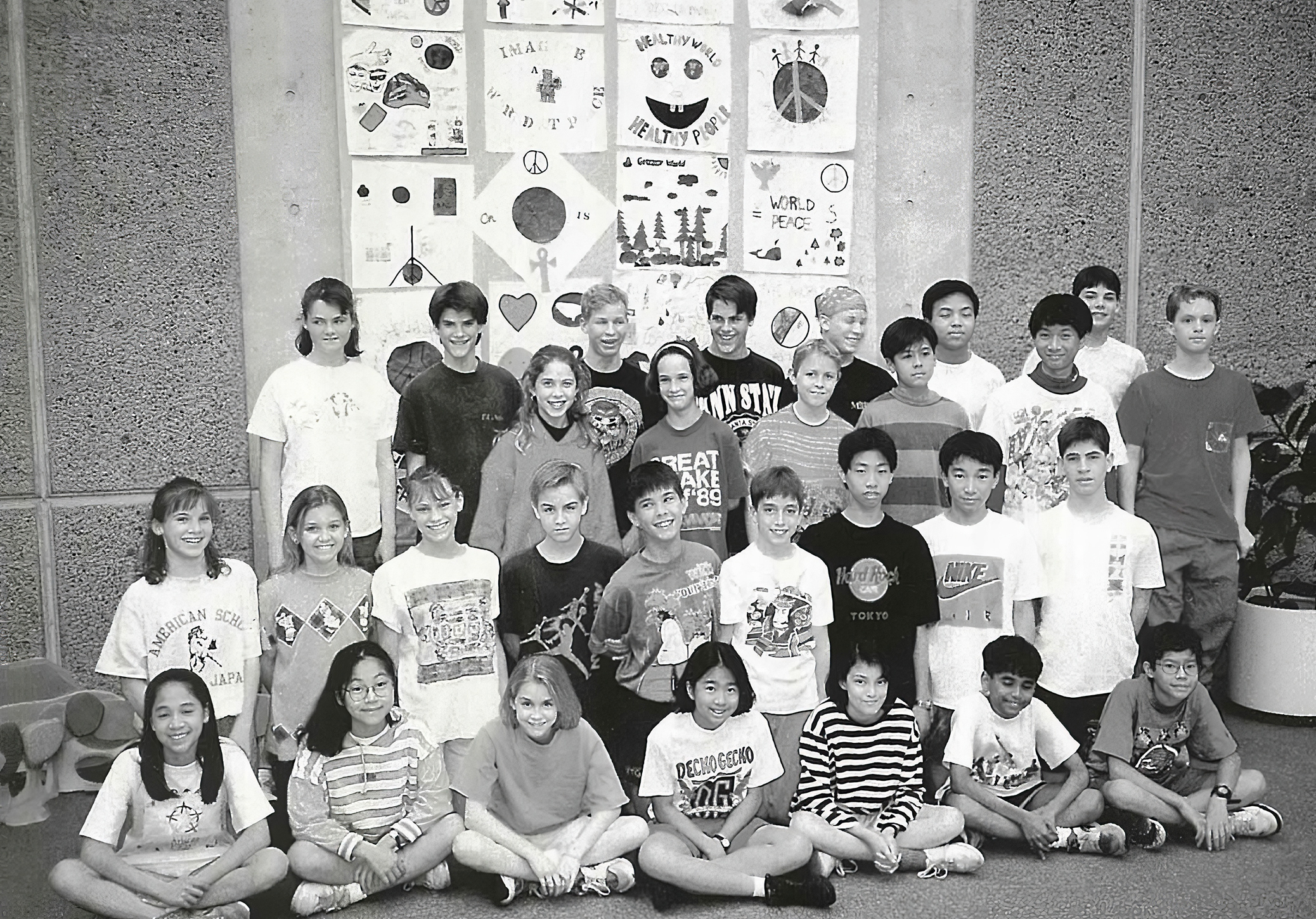
John’s ASIJ journey started in 1990 when his family moved to Tokyo. Entering the fourth grade, he remembers the campus as a place of wonder. “It was just an overall amazing experience, bigger than life,” John recalled. “I remember the circular building of the elementary school and the beautiful landscaping in the middle, and of course, the Mount Fuji slide that was iconic for us when we were young.”
While the architecture left an impression on John (as it does for many alumni), it was the people who helped shape his trajectory.
John was nominated for the ASIJ Alumni Impact Award by his lifelong friend, Sarah Thomas Polak ’01. John and Sarah met as children in Tokyo where their families became fast friends as some of the only South Indian households in the area. Sarah nominated John because, “he truly embodies what it means to be a global citizen —showcasing curiosity, inquisitiveness, and really challenging himself in anything and everything he does.”
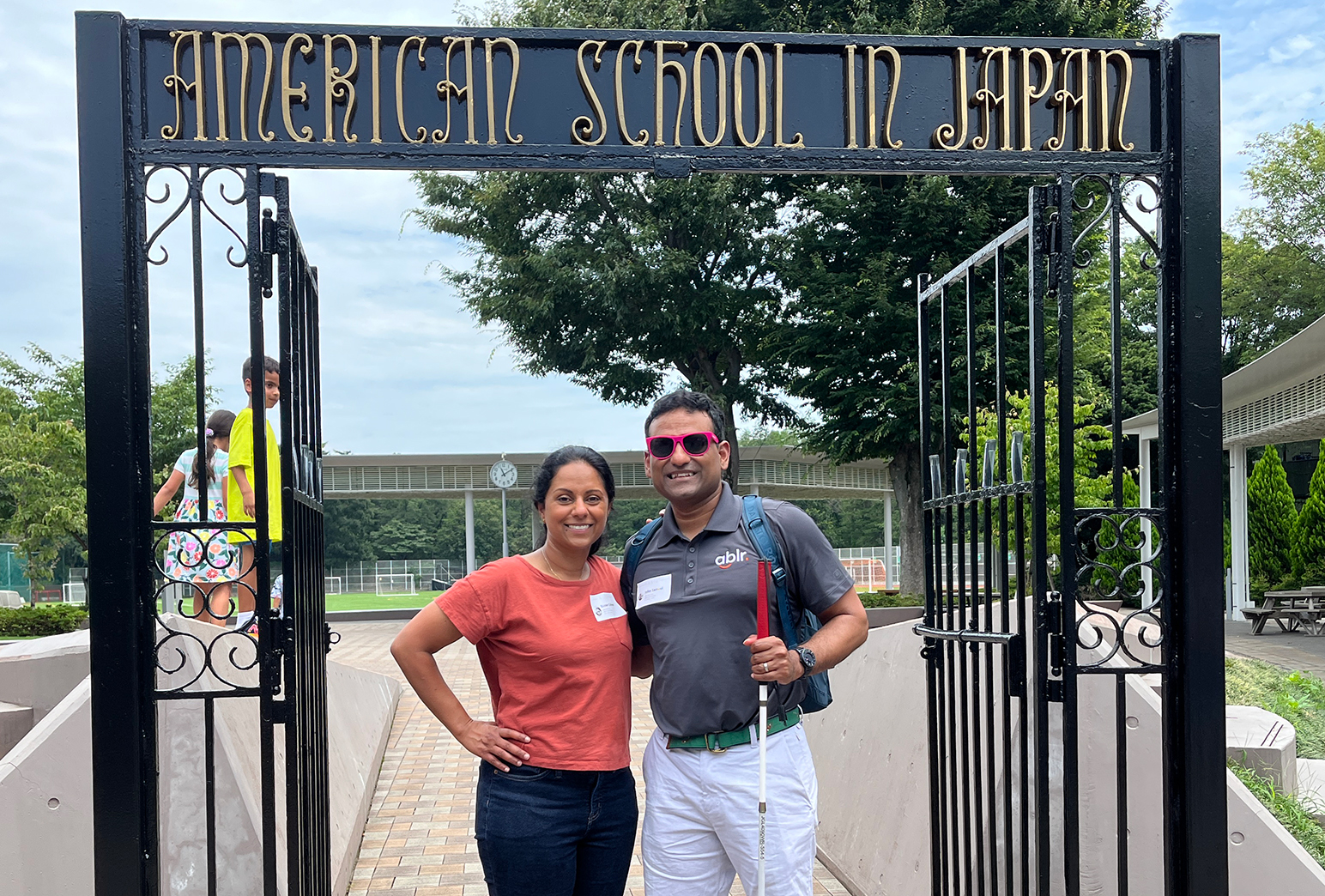
John's work is centered on removing barriers for people with disabilities in all aspects of life, through digital accessibility services, disability inclusion training, and workforce development programs. This work is personally important to John, as a blind person himself.
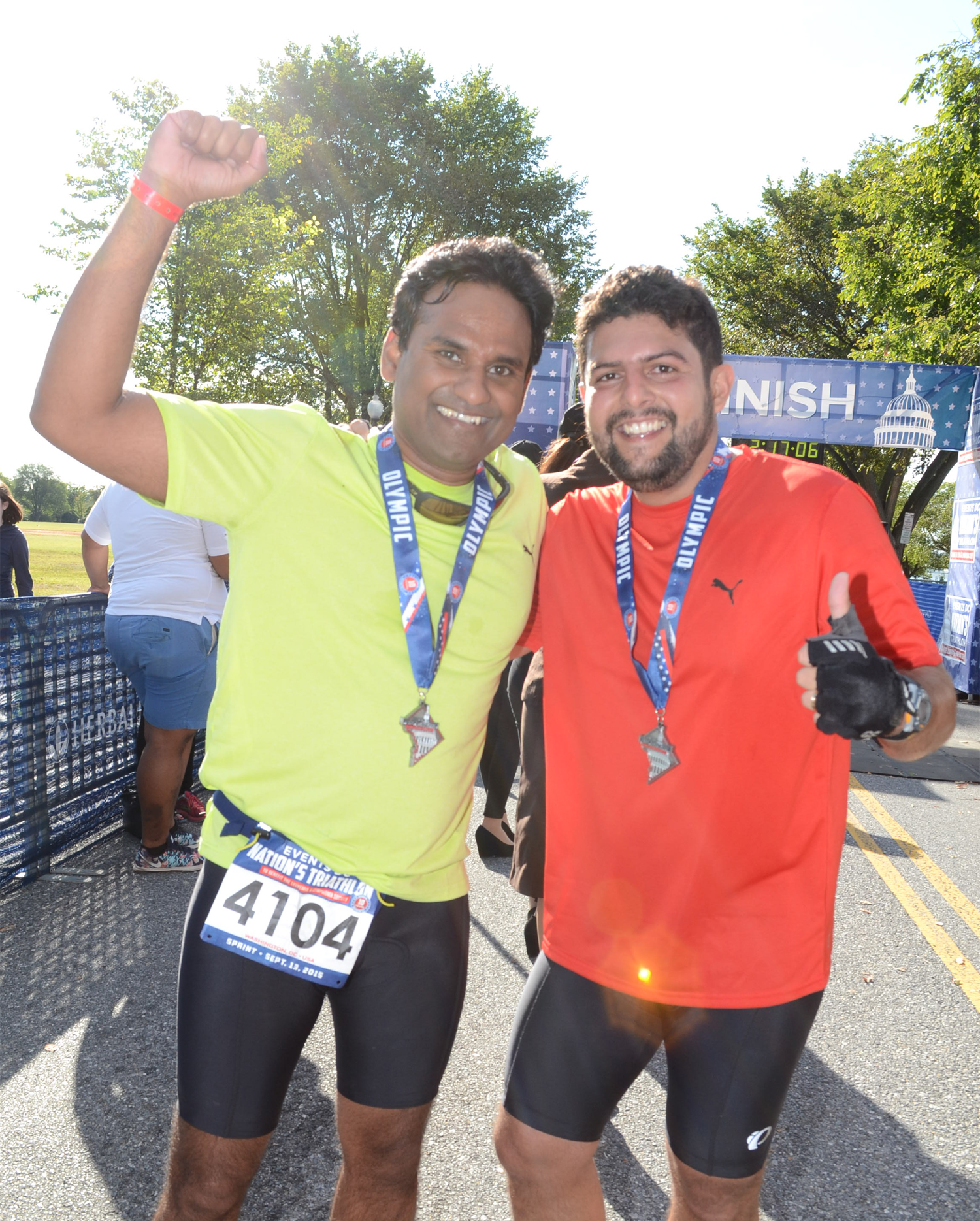
After leaving Japan, Sarah and John have continued their friendship over the years, through John’s time in India, Cameroon, New York City, and finally North Carolina. Sarah admires that John is “that person that goes out and pushes himself.” She recalls his relentless drive: “He’ll hear that I’m doing a triathlon and say, ‘I'm going to do one too.’ And that's just the person that he is. He hears an idea. He likes it and he goes after it no matter what the obstacles are.”
This ambitious mindset started at ASIJ. John remembers Sharon Lanier FF ’90-’16, his middle school cross country coach. She was “one of the first people who really believed in me and gave me a sense of, hey, you're really good at something. You should really work on it. …You need those people who encourage you to help you believe in yourself.”
A Middle East and African Studies course with Judith Hunt FF ’86-’95 introduced John to the world beyond Japan and the US. Years later when he launched his first company, a telecom infrastructure company in Cameroon, he traced the spark back to Ms. Hunt’s classroom. Without that knowledge, John may not have considered working in Cameroon at all, “I don’t think I would have ever done that. I wouldn't have known anything about Africa or the or the culture if it wasn't for Ms. Hunt.” John was able to spread that company across the continent of Africa over three years.
After ASIJ, John’s family moved to North Carolina where he graduated high school and then college. It was around that time when John was diagnosed with a degenerative eye condition called retinitis pigmentosa. “When I got the news, it was devastating. I really struggled with it. The first things that went through my mind were – what girl wants to be with the guy who can't see? What kind of job could I have if I was blind? And where could I live? You know, these basic questions consumed me all the time. I struggled with them.”
Despite his worsening vision, John completed his MBA and joined a private equity firm. But after a few years, his sight had deteriorated to the point where he could no longer see the computer screen. He thought his career was over.
“At the ripe age of 36 years old, I thought I was done. My career was completely over because I couldn't see the computer.” It took John a long time to embrace his disability. He spent years keeping it a secret, “because I was ashamed and embarrassed. And it took me meeting other people who had gone through this experience, who had thrived despite having this condition that really helped me understand that I can do this.” It took John nearly 17 years to accept his visual impairment and his diagnosis of blindness.
Because John met Ed Summers.
Ed Summers, a software engineer, had the same eye condition as John, and lived in John’s hometown of Cary, North Carolina. Ed had developed a software that helped people who were blind or had low vision to visualize graphs and charts.
After months of failed attempts to connect with Ed, fate intervened. Nicole, John’s wife, suggested they move back to North Carolina, John’s home state and also Ed’s. John’s dad, Joseph, was so excited at the prospect of them moving home, he jumped in the car to drive over to the house John and his family planned to move into. He called John on the way, shouting “There's a blind guy in the road! Maybe it's the guy you're trying to get in touch with.”
John implored him, “Dad, please don't yell at blind people on the road. Don't yell at anyone.” Joseph hopped out of the car and approached the man. It was indeed Ed Summers. That random encounter on the road opened up John’s life. Ed showed John that his career wasn’t over.
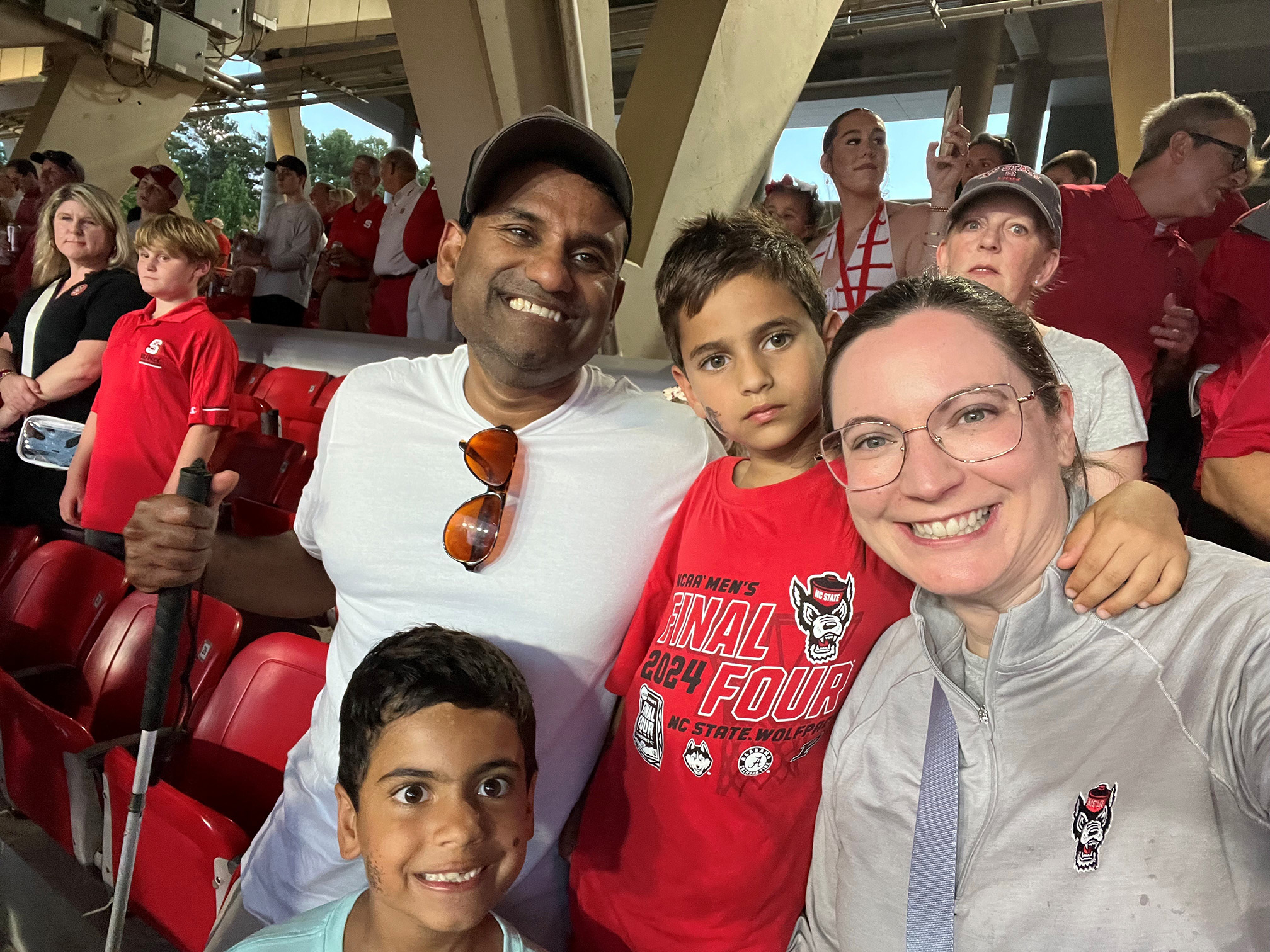
Ed introduced John to the world of accessibility. Inspired, John launched Ablr, a full service disability inclusion organization that removes barriers for all people with disabilities. The work John does today, by breaking down barriers for people with disabilities, is deeply meaningful to him. “It’s a way for me to pay it forward and thank all those people who've helped me in my life.”
“Accepting my blindness and my disability felt like a weight off my shoulders,” said John. “It felt so good, like I could do anything.”
John knows firsthand how difficult it can be to accept yourself. “It’s something I have really embraced and leaned into over the last nine years,” he explained. ”My blindness, my disability, is one aspect of who I am. It's not my full identity.” His advice to others navigating their own obstacles is simple: take your time. By giving himself that grace, his acceptance has opened up a “whole new world.”
Today, John is most proud of helping other people with blindness find employment they once thought impossible. Helping them change their mindset and showing them they have a choice— “that's what drives me everyday, ” John smiled.
Reflecting on his award, John acknowledges the community where it all began. “I am just so happy to share this with all of the Mustangs out there across the globe, because our community is making an impact everywhere and I couldn't be more proud of that.”
More ASIJ Stories
Life at school is full of stories and the narrative of where our vision will take us is told each day through the learning our students experience in the classroom and beyond.