Taking the Reins: Empowerment in Practice
At The American School in Japan, empowerment is the practice of giving both students and educators the agency, trust, and support to take ownership of their learning journeys. When learners are empowered, curiosity leads to confidence, and individual growth becomes a shared victory for the whole community.
The following three stories showcase what happens when our faculty create environments that encourage risks, invite collaboration, and embrace every student's unique identity:
Colin Taylor, middle/high school band teacher
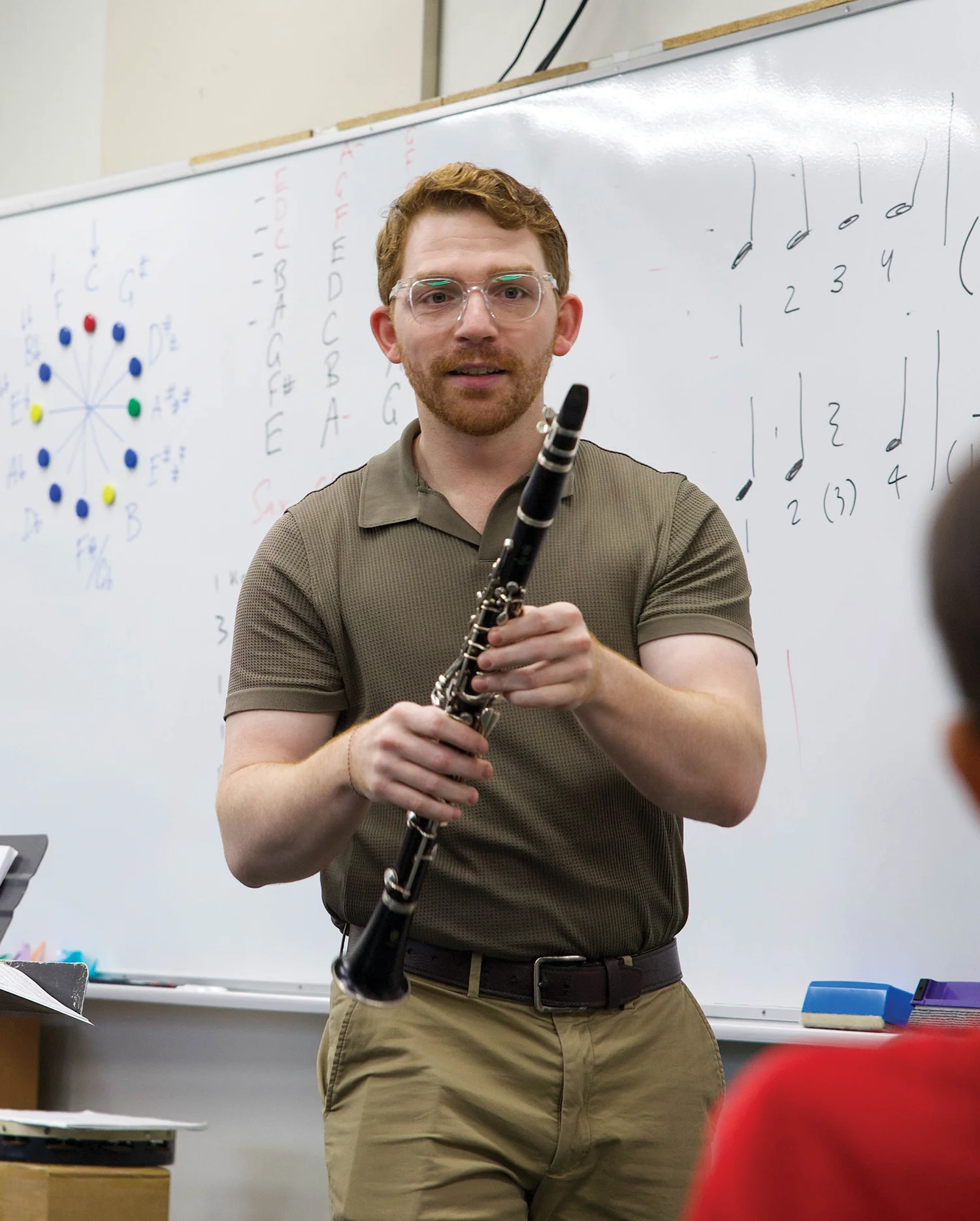
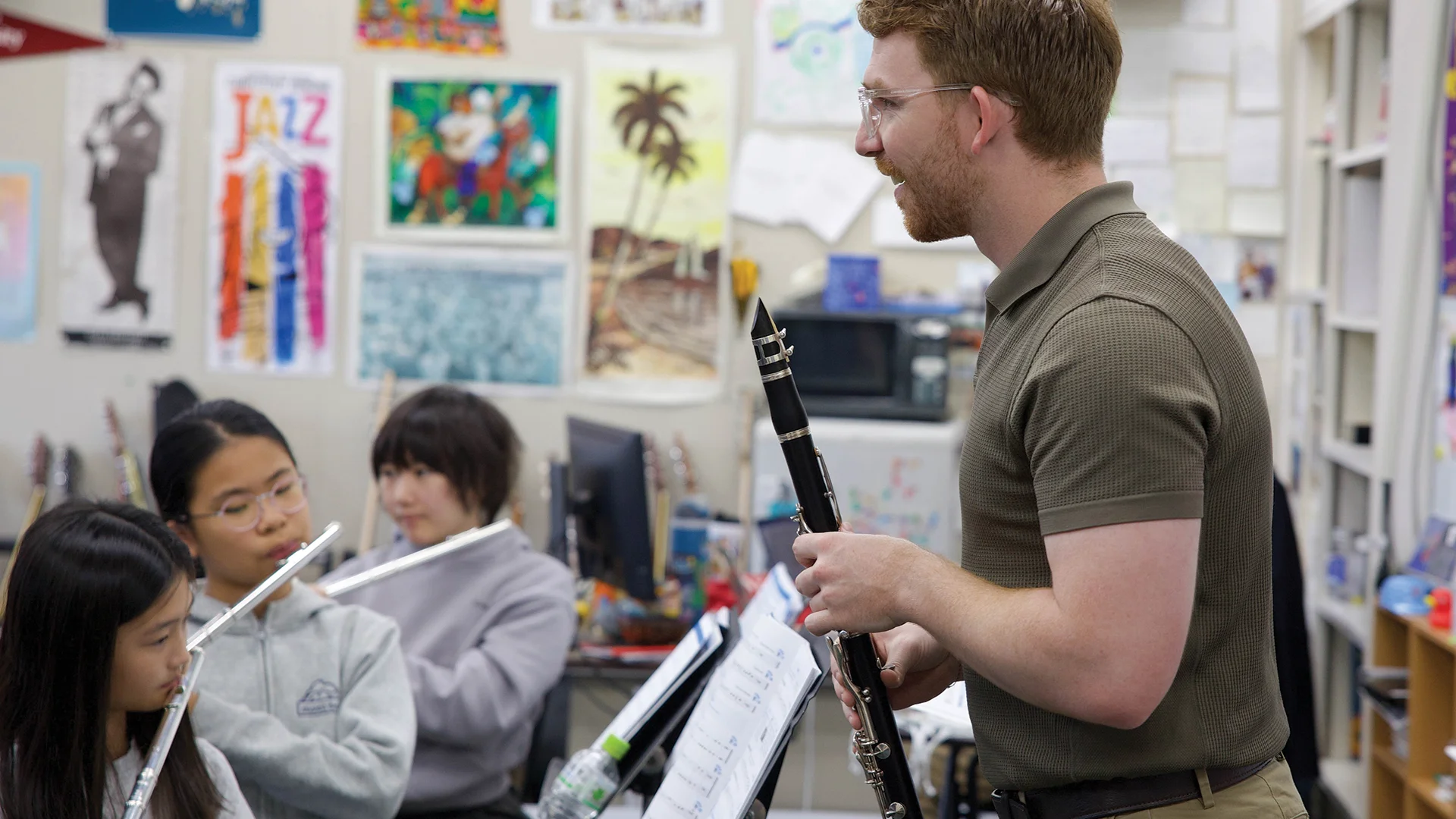
Colin turns foundational music skills into a vehicle for creative ownership through improvisation, giving students the confidence to step outside their comfort zones and find their own voice.
When I was in sixth grade, my piano teacher showed me the blues and that was what really got me hooked into music again. I had gone through a period where I was like ‘music’s okay,’ but I didn’t love it. When I started getting to create my own music and improvising, it was the first time I wasn’t just playing other people’s music but I was creating and playing something that was my own, and it gave me a lot of ownership of music. That lesson is why we call this Gary’s Blues. Gary was my piano teacher, and this lesson inspired me to really focus on music. It started the snowball. I still remember the first time I played the blues with Gary. I wanted to share that experience that I had with my students.
Some students were nervous and [improv] is outside of their comfort zone, but for a lot of students this was a really big moment and they really enjoyed it.
At the ASIJ-hosted Association of Music in International Schools music educators’ conference, I presented on how we introduced this to our kids. We’re using the skills they’re already doing in beginner band but in a different format. Instead of playing “Hot Cross Buns” every day, we’re doing something a little different, but with the notes and skills they already have. I wanted to share this with other educators and hear how they can add their own ideas or implement this in their classrooms.
Bronwyn Yamasaki, Pre-K teacher
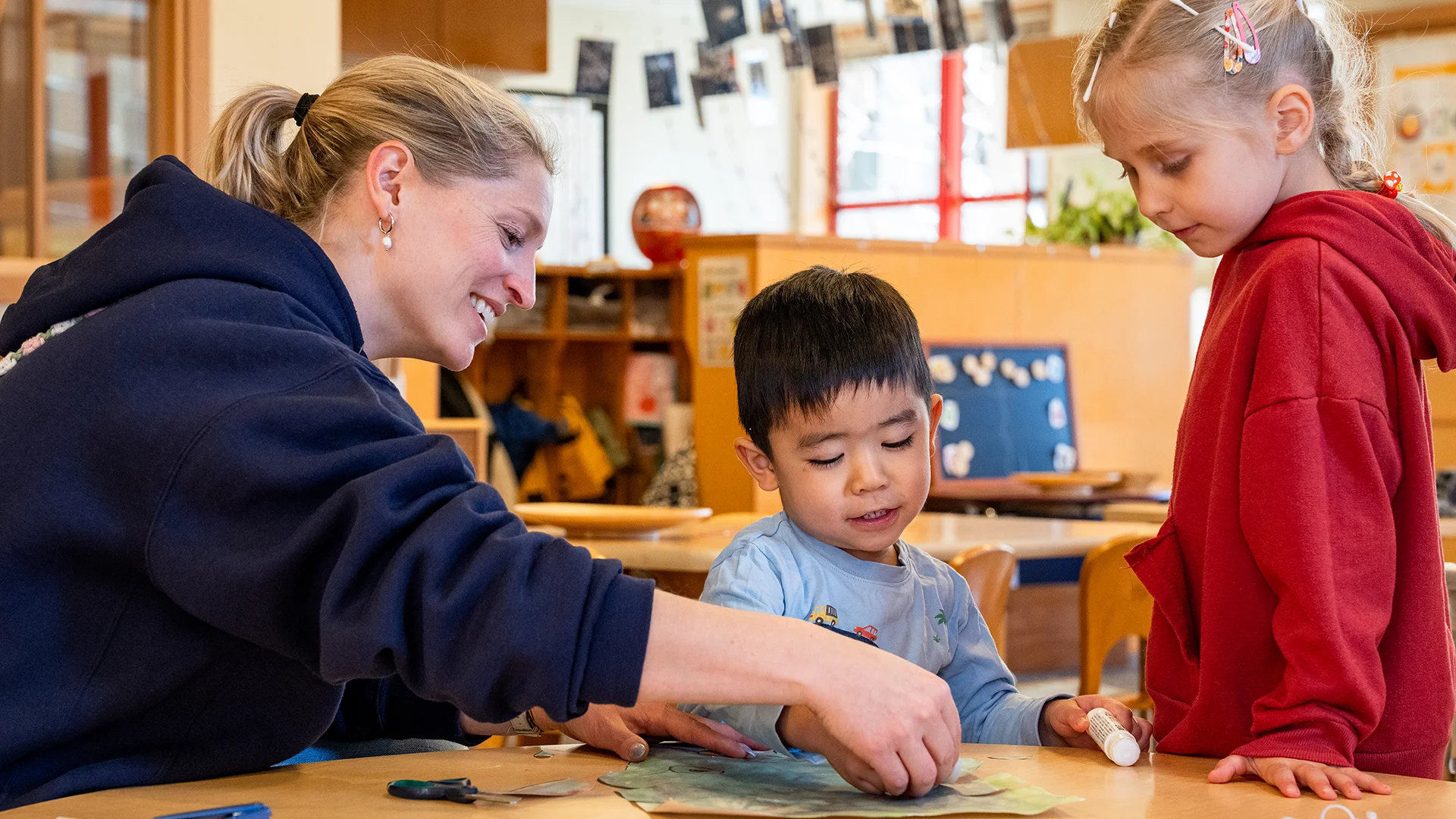
Bronwyn demonstrates how professional collaboration across classrooms empowers our youngest learners to build community, expand their social circles, and find joy in sharing their learning.
I’m fortunate to work closely as a team with very experienced teachers who have great ideas and strengths I can learn from. Whenever I face a challenge or have a question in the classroom, I feel very comfortable going to them, and I truly value their feedback.
For example, Teacher Rachael showed us how powerful movement can be. She does a lot of movement activities and recommends songs for us, all of which help strengthen the children’s coordination, gross motor skills, and rhythm. Whenever an idea works like that, we offer it to the other classrooms. Teacher Kathleen has great ideas for table activities and games which support the children's social skills and abilities to collaborate with others, and she will often share her materials with the rest of the Pre-K team. That kind of collaboration has really helped with our planning in our own classrooms.
A question brought up during last year's Pathways professional development was, "How can we strengthen relationships between grade levels and throughout the school?" That question sparked new ideas for managing the day and connecting students.
Within Pre-K, we started mixing classes once a week for morning snack, giving the children the opportunity to visit other classrooms, converse with old friends, and make new ones. We also started getting all the Pre-K students together once a week for "We Sing Wednesday," where we perform songs we’ve been singing in our classroom for the other classes. It has helped the Pre-K students build confidence in performing and practice being audience members. We even invited nursery students to play in our classrooms and arranged joint activities with kindergarten students.
Not only was this a great experience for the students, but it also gave teachers more opportunities to collaborate and interact across grade levels—something that is usually difficult to do with our busy schedules.
Cindy Lin, second-grade teacher
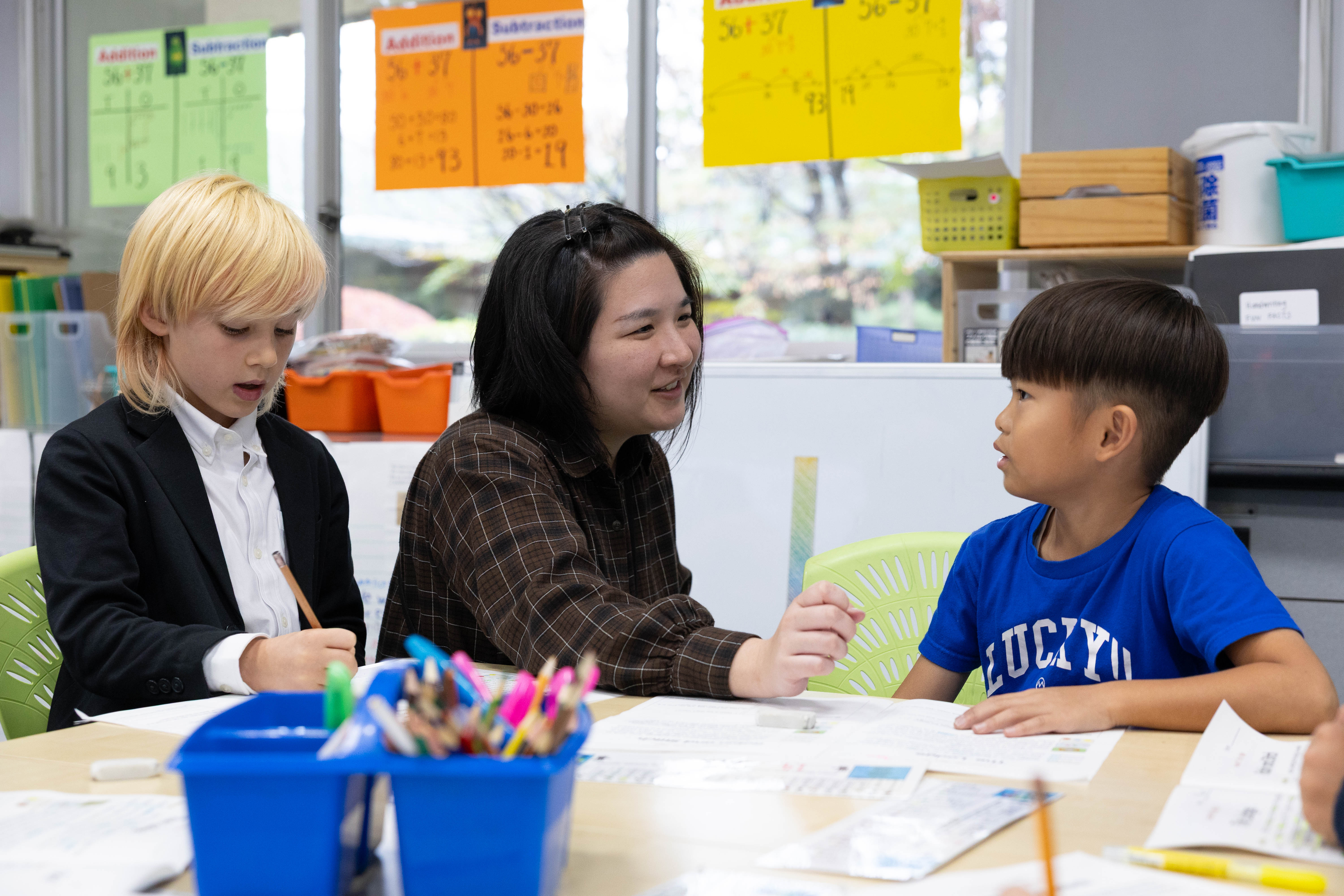
Cindy draws on her own multilingual journey to cultivate a safe, comfortable classroom where every student is known, valued, and cared for as an individual, and whole-child growth thrives.
Growing up, Cindy Lin, second-grade teacher, moved between languages and cultures. Navigating her own multilingual learning experience shaped how she views her students today, and Cindy carries deep empathy for students who are still building their vocabulary.
Remembering how essential peer support was in her own youth, Cindy fosters that same sense of security and belonging in her own classroom at ASIJ.
"In second grade, everybody is very supportive of each other. If a student is struggling, you'll see other students helping. They support each other. I think ASIJ does a really good job of communicating that everybody is on their own journey. The second grade teachers are very good at communicating that we are all learning English; we establish that the classroom is a safe place where we can ask questions and identify words and things that we don't know. Creating a classroom environment where kids feel comfortable asking questions is important. There are students that say “I don't get it,” and that honesty shows that they feel safe. I like this about ASIJ. Nobody feels like they need to pretend and they know they can ask for help.”
Cindy’s background informs how she embraces her students' full linguistic identities, both in the classroom and at home.
"As a multilingual person, it's hard to limit yourself to speaking one language. It's like your identity is to use all three. I feel most natural in the way I speak when I'm speaking with other multilingual people, and I like to switch back and forth between languages. If a word is better expressed in Japanese, I'm going to throw Japanese in there."
Ultimately, Cindy sees multilingualism as nurturing the whole child. "Having a strong first language will help them grow in their second language…If you don't have a strong first language base, you can't learn another language, because you can't make connections. At ASIJ, our goal is to educate the whole child.
More ASIJ Stories
Life at school is full of stories and the narrative of where our vision will take us is told each day through the learning our students experience in the classroom and beyond.


