
Young Alumni Changemaker Award 2026
Jasmine is a passionate mental health counselor working to change the stigma and accessibility around mental health care, support, and resources. Her personal experience growing up with a parent with mental illness, her interest in knowing people deeply, and her journey of self confidence have all led her to working to support clients in New York City through the modality of somatic therapy, which explores how the body expresses deeply painful experiences, applying mind-body healing to aid with trauma recovery (Harvard Health).
The ASIJ Young Alumni Changemaker Award is presented annually to recognize and honor alumni within 15 years of graduation who have brought about a significant positive change to a community or institution—for example, through service work or through a role in policy, advocacy, or the nonprofit sector. Upon receiving the award, Jasmine remarked that “ASIJ is full of amazing, very intelligent, very active people.” and that winning the ASIJ Alumni Changemaker award means a lot, “because when I was there, I don't think I would have ever thought I would [be] awarded something like this to be recognized in that way and I’m proud of how far I’ve come.”
Originally from Fukuoka, Japan, Jasmine transferred to ASIJ for her sophomore year of high school in pursuit of rigorous academic opportunities. The transition was difficult, not only transitioning to a new, educationally competitive environment, but being raised by a parent with mental illness, which affected her own mental health. Jasmine found herself constantly comparing herself to classmates, thinking, why can’t I do that? Or why don’t I have the confidence to do that?
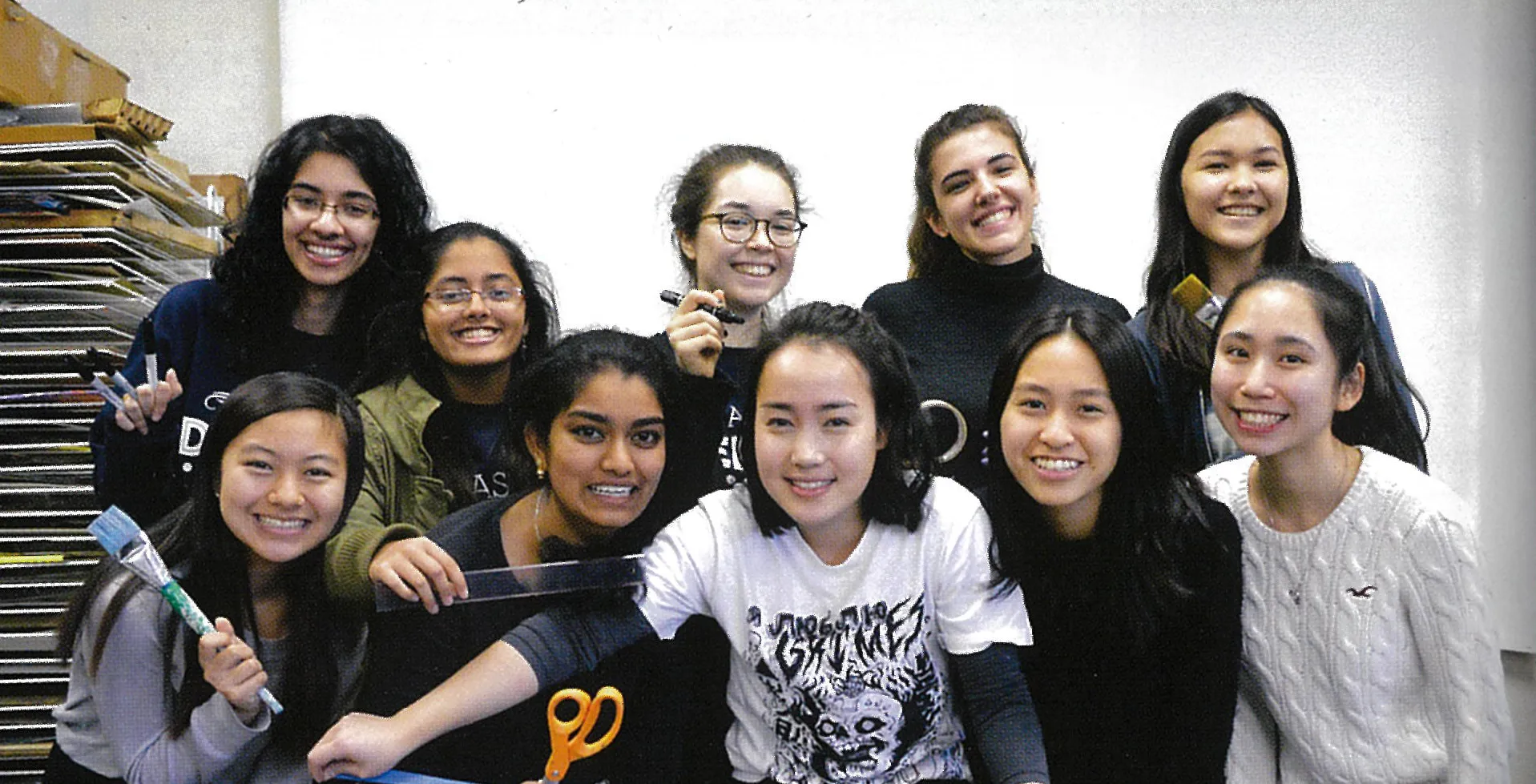
In Jasmine’s sophomore year, her first at ASIJ, Jasmine took her first acting class with David Neale, ASIJ’s current theater manager. Growing up shy, public speaking terrified Jasmine, but she put herself out there, and taking the step of trying something new began to boost her confidence. “I was really proud of myself for doing that.” Jasmine joked, “I was not good at acting at all,” but she recognized the opportunity of being able to take an acting class and wanted to step outside of her comfort zone. From there, she joined clubs, “just trying to connect with people.” Ultimately, Jasmine met some of her best friends, Sofie Kusaba ’16 and Lahari Gorantla ’16, with whom she joined Nagomi Art Club, a club that connected with local people with disabilities through art, her first instance of being involved in supporting community efforts, which later led to the desire for a career in counseling.
Academically, Jasmine gives credit to her social studies teacher Steve Welckle (FF ’03-’22, P ‘13, P ‘15, P ‘21) who pushed her to, “face myself and not try to hide." Jasmine notes, “It was the first time I was challenged by a teacher like that.” At that point, Jasmine made a promise to herself. “Okay, I'm going to show up. I'm going to show up imperfectly.” The seeds of her belief in herself today were planted at ASIJ. “I was challenged, but in the best way” She knew attending a more rigorous high school was going to be a good stepping stone for what she hoped to achieve, and it “absolutely was,” Jasmine remarked.
After ASIJ, Jasmine graduated from Lewis & Clark College with a major in psychology, spent two years working at the Posse Foundation, a comprehensive leadership scholarship program, where she supported cohorts of students as they transitioned from high school to college, and then decided to go to graduate school for a master’s in mental health counseling. Jasmine said, “The timing of when I decided to go to grad school for mental health counseling was a moment where I felt like I had built enough trust in myself that I was able to take care of myself, that I felt like I could take care of other people, too.” She has always loved hearing about people’s lives, their experiences, and knowing the depth of their experience.
.webp)
With this interest in people’s stories, and with seeing her parent’s experience firsthand, Jasmine has always been interested in a career in mental health, with a goal to “become the counselor my parent never had.” Jasmine witnessed the stigma surrounding mental health, including the shame that often accompanies a diagnosis; experiencing this “up close and personal” allowed her to develop a deep empathy for those in a similar position. A reminder that, “This is somebody who is struggling, and they deserve support and care just like anyone else.” There are many reasons why people develop mental illness, whether that is trauma, genetics, or environmental factors.
Jasmine hopes to challenge this stigma and inaccessibility of care, especially in Japan. Jasmine remembers attending an appointment with her parent when she was younger. She had been excited to be able to share her experience and perspective with the counselor and “I felt so dismissed. I shared my experiences and they basically wrote me off saying that I was just a teenager who was frustrated at her parents.” Supporting people going through similar experiences to her is Jasmine’s way of “transforming my painful experiences into something empowering.”
Jasmine is now finishing her degree in the Baruch College Mental Health Counseling Program and is a clinician who provides somatic therapy to clients in New York City. The work is “all about being in the present moment. It's all about what's here right now. And how can we get in touch with what's happening. So, you know, what are you feeling? What are your sensations in your body that you're feeling? How does your breath feel? How does your heart feel?”
She studies how the mind-body connection and how, “our bodies remember. So, if we go through the body and strengthen our mind-body connection, then we can get to the root: the root of our patterns and of behaviors and difficulties.” Jasmine discovered her connection to mindfulness during her high school JUMP trip to Bhutan, a country known for its Gross National Happiness Philosophy. At the time, most students chose to go on a JUMP trip with close friends, but Jasmine, continuously working to push herself, went because no phone for a week, journaling, and meditating “sounded awesome.”
One of Jasmine's current clients is a teenager who has a parent with severe mental illness. As their therapist, Jasmine is able to actively support her client to process a lot of the same experiences she has gone through herself. She reflects that “It’s great that many kids now have access to a space where they can be validated in their experiences at home.”
To help normalize the challenges faced by children of family members with mental illness, Jasmine and a cohort member are co-authoring a children's book. The book is inspired by her own experiences and those of her clients to “make people who have a parent with mental illness feel less alone and validate their experience, normalize some of the feelings they might be having.”
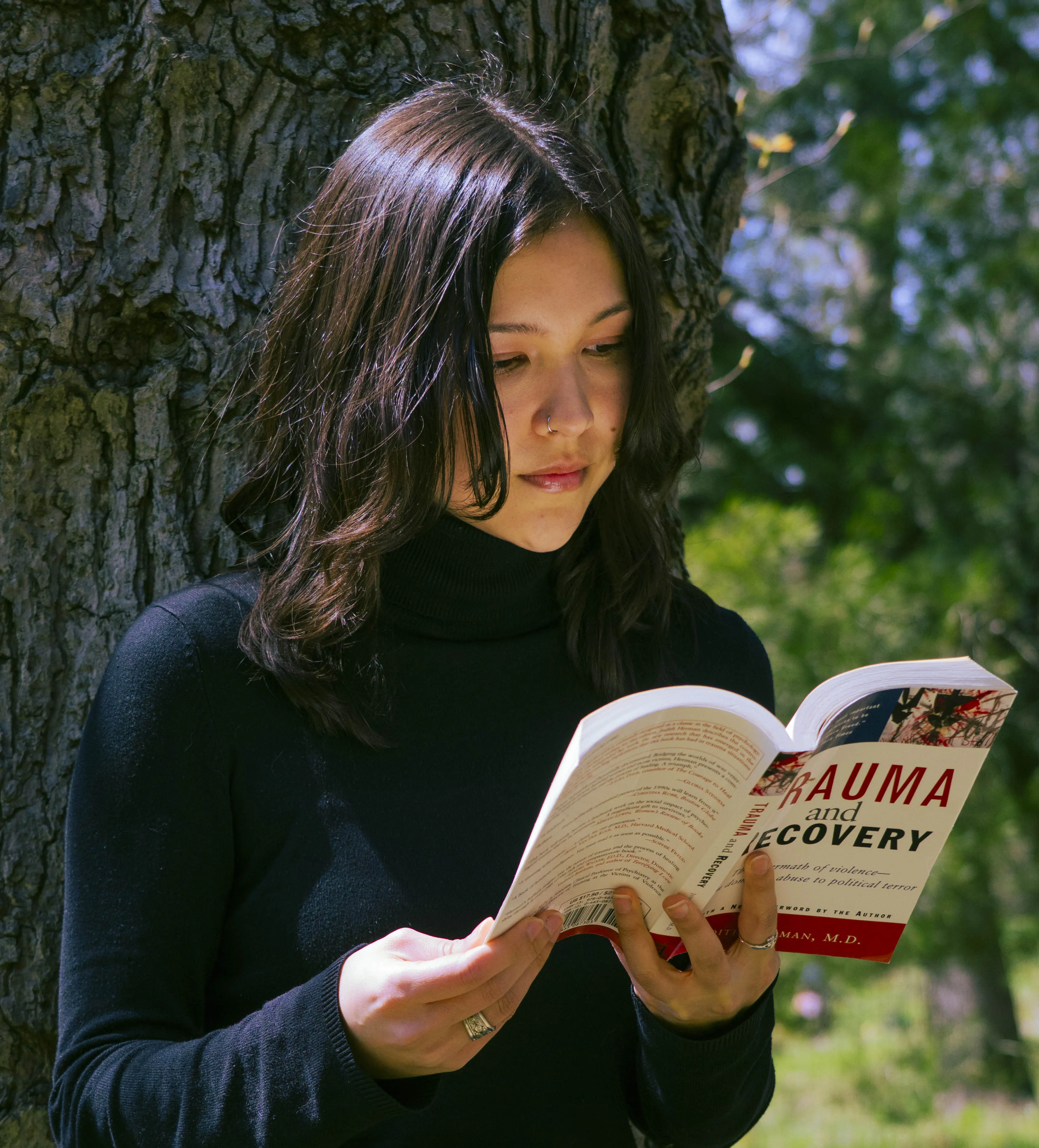
However, what Jasmine is most proud of is her growth with her own mental health. Jasmine has had to face a lot of her own inner difficulties as she takes on this work of supporting other people going through similar experiences. The energy that she has poured into her own mental health has allowed her to, “transform that kind of pain into something that is empowering for myself and for my clients.” Jasmine says it is incredibly rewarding to see her clients grow and find success within the new somatic modality, and “discover new ways to connect with themselves.”
Looking back on her own journey and the challenges she felt at the start of high school, Jasmine advises the younger version of herself to focus on “finding your people, not focusing too much on what you think you should be doing or what is the right kind of way to be involved.” It can be so easy, especially in competitive environments, to feel like you need to do everything perfectly, but the most important thing is to find your niche, “a little pocket of your interests, of your people.”
Jasmine has done just that. She has been able to “cultivate a second family here, in the city” of fellow ASIJ alumni living in New York. “My closest friends are from ASIJ here…and so I feel like that's also the kind of community, the international global kind of community, that is ASIJ”.
After graduation from Baruch, Jasmine will continue to hone her somatic therapy skills as a full time therapist working at the Somatic Psychotherapy Center in New York City.
More ASIJ Stories
Life at school is full of stories and the narrative of where our vision will take us is told each day through the learning our students experience in the classroom and beyond.



.jpg)